Stroke Rehabilitation: Regaining Independence
A stroke can be a life-altering event, often leaving survivors with hemiplegia (paralysis on one side) or significant loss of motor control. The most critical period for recovery is the first six months, during which the brain is most capable of neuroplasticity—the ability to rewire itself and form new neural connections to bypass damaged areas.
Neurological physiotherapy is the cornerstone of post-stroke care. Unlike general fitness, neuro-rehab focuses on functional movement patterns. By repetitive, task-specific training, therapists help patients "re-learn" basic actions like sitting, standing, and walking, turning small daily victories into long-term independence.
Why Physiotherapy is Important for Stroke Rehabilitation: Regaining Independence
Neuro-Developmental Treatment
Specialized handling techniques to inhibit abnormal muscle tone (spasticity) and facilitate normal movement patterns in the affected limbs.
Task-Oriented Training
Focusing on real-world functional goals, such as reaching for a cup or standing from a chair, to strengthen neural pathways through repetition.
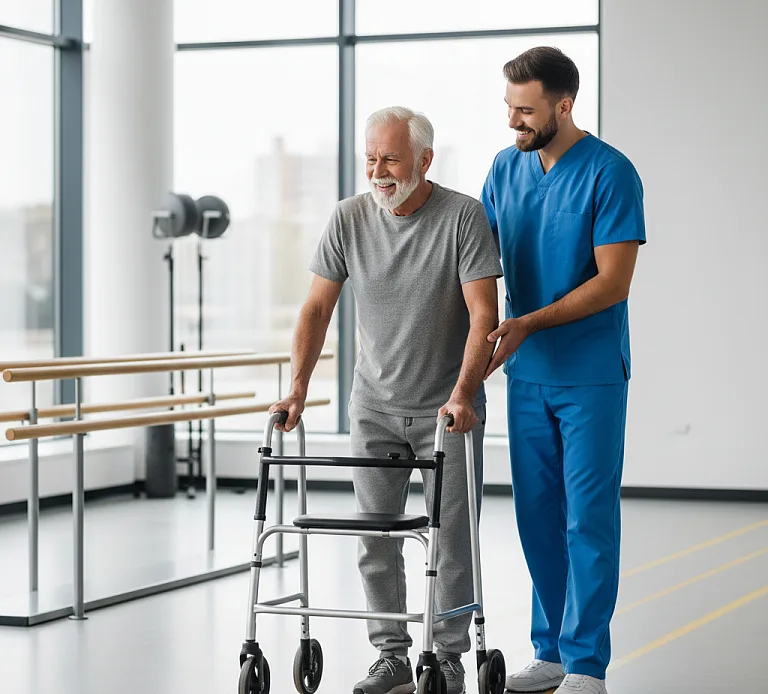
Gait Re-education
A step-by-step breakdown of walking, utilizing assistive devices and therapist support to ensure a safe, balanced, and confident stride.
Constraint-Induced Movement
Gently encouraging the use of the affected side by limiting the use of the stronger side, forcing the brain to reconnect with weakened muscles.